
What's in a (nick)name?
Anywhere you find a history of our club, you will usually find the history of our nickname 'The Cherries'. Somehow it has become a matter of folklore that this stems from the idea that our ground was built on, or adjacent to a cherry orchard - and the name comes from that, conjuring up idyllic, pastoral images of football being played alongside rows of cherry trees, blossoming in the spring..
No lesser an outlet than NBC Sports mused:
>The luxurious Cooper-Dean Estate was based next to their stadium and that estate was lined with Cherry Orchards.
>
>Imagine being a Bournemouth fan over 100 years ago, strolling along the beach in the sun and plucking a few cherries off the perfectly lined orchards on the way to watch the cherries play.
Ok - it sounds wonderful and twee and joyous, but it's just not the case. Let's leave aside the distance from the beach to Kings Park, and the fact that the Cooper-Dean house at what was then called "Little Down" but is now part of the JP Morgan campus isn't on the way to the ground from the beach anyway... the simple fact is that there wasn't ever a cherry orchard on land near what would become the football ground. Going back as far as 1870, we can see from maps of the area that this was simply common land.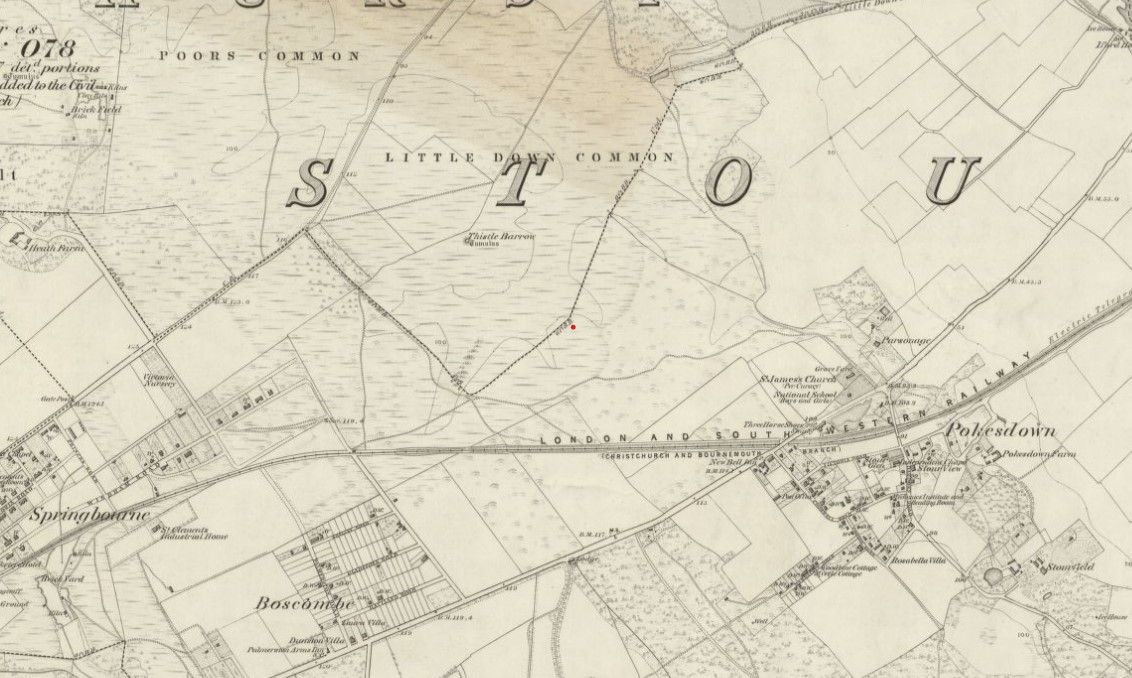
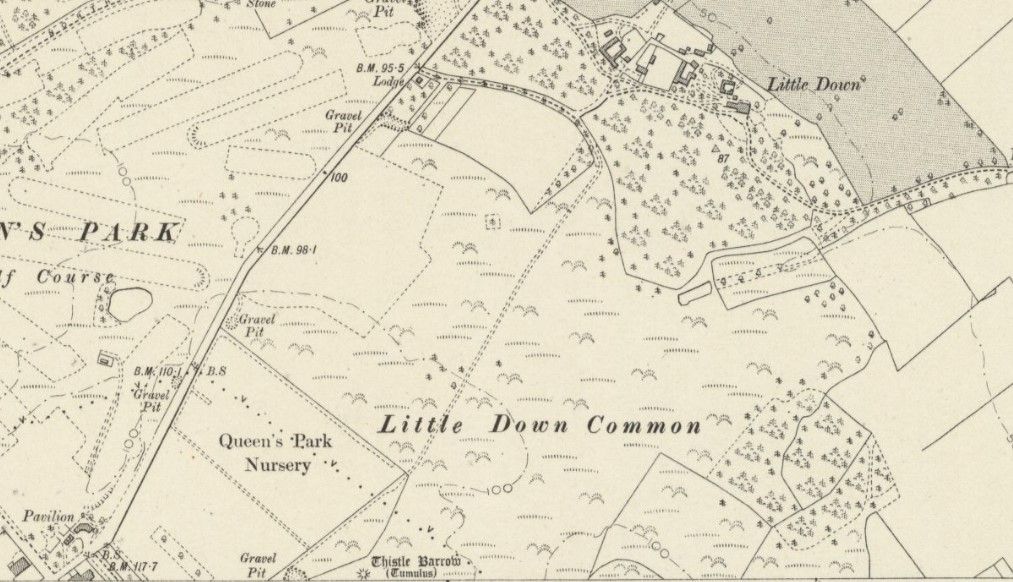
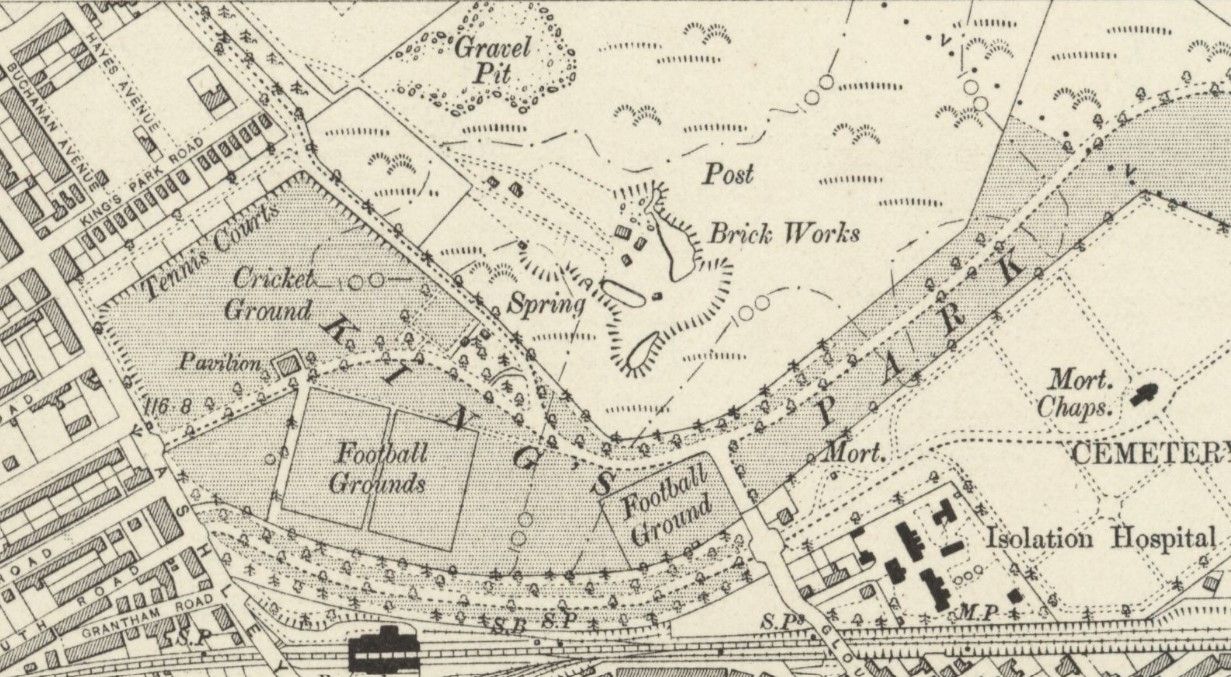
In fact, and as other histories of the club rightly point out - this was waste land. The site was a gravel pit and was next to a brick works rather than a cherry orchard - as we can see from the ordnance survey maps drawn up in 1908 and published in the year that the club was leased the land, 1910.
The real explanation for the nickname is much simpler, and far less romantic. The Boscombe pioneers played in red and white stripes. We can see from news reports at the time that not only were Boscombe referred to as this, but our near neighbours Southampton and other teams playing in this pattern were referred to as wearing Cherry Stripes.. Indeed Southampton were referred to as 'The Cherry Stripes' before our club existed and with us playing in the same colours, that seems to have been adopted to describe our shirts.. In our case, and Boscombe having no obvious other nickname like 'Saints' - it stuck. The team became nicknamed The Cherry Stripes, fans began to shout 'Up The Cherries' and that was that. In all departments.
Comments (0)
Loading comments…